Source Embedded LED Down Light for Home, Office, and Retail
Find 30 options for embedded led down light with varying voltage, certifications, and beam angles. Buyers can compare specifications from manufacturers in China for applications in engineering and home furnishing.
Key considerations
Products List


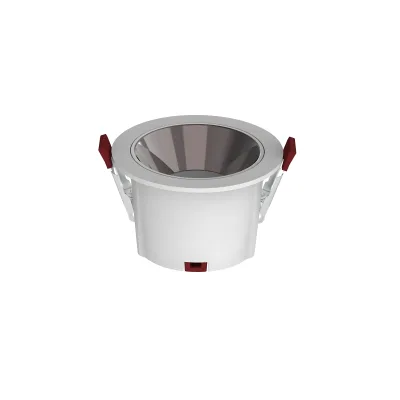


Comprehensive Sourcing Guide
Strategic Sourcing Guide for Embedded LED Down Lights
The global market for embedded LED down lights has expanded significantly, driven by the demand for energy-efficient, aesthetically minimal, and high-performance lighting solutions for both residential and commercial environments. For B2B procurement professionals, navigating this sector requires a disciplined approach that distinguishes between generic product listings and verified, application-ready specifications. This guide synthesizes observed market data and technical attributes to provide a framework for sourcing high-quality recessed lighting. Buyers must prioritize technical verification over marketing claims, ensuring that every procurement decision aligns with specific project requirements, regulatory standards, and long-term operational goals.
Technical Specifications and Product Attributes
When evaluating embedded LED down lights, the primary focus must be on the intersection of optical performance, electrical compatibility, and physical dimensions. The market presents a diverse array of configurations, ranging from standard residential units to specialized industrial fixtures. A critical observation in current listings is the variation in voltage requirements. While many units are designed for standard 220V-240V 50/60Hz operation, specific applications may require 12V systems, necessitating careful verification of the driver compatibility before bulk ordering.
Color temperature and emitting color are fundamental to the visual outcome of a lighting design. The observed market data indicates a prevalence of warm white options, specifically around 2700K, which provides a soft, inviting ambiance suitable for living spaces and hospitality sectors. However, other listings show emitting colors ranging from yellow to standard warm white, suggesting that buyers must explicitly define their color temperature needs. The Color Rendering Index (Ra) is another vital metric; observed data points to an Ra of 80, which is generally acceptable for general lighting but may be insufficient for retail environments requiring higher fidelity.
Physical installation parameters are equally critical. The "Recessed In" installation mode is the standard for embedded fixtures, requiring precise cutout dimensions. Specific product models observed in the market list cutout sizes of 75mm and overall lamp sizes of 8070mm. However, the standard "3050*40" dimension cited in some contexts likely refers to packaging or a different product category, highlighting the necessity of cross-referencing the specific model number, such as LC7261S or BYBL1020, against the architectural drawings. Beam angles, observed at 40° in specific listings, dictate the spread of light and are essential for determining whether a fixture will provide general illumination or accent lighting.
Compliance and Certification Verification
In the B2B sector, compliance is not merely a formality but a prerequisite for market entry and liability protection. The observed product attributes list a robust set of certifications, including CE, CCC, RoHS, FCC, GS, and CQC. The presence of these marks indicates adherence to specific regional and international safety and environmental standards. For instance, CE certification is essential for European markets, while CCC is mandatory for the Chinese domestic market. RoHS compliance ensures that the product does not contain hazardous substances, a critical factor for environmental regulations globally.
However, buyers must exercise caution when interpreting certification lists. The presence of a certification label on a product page does not automatically guarantee that every unit in a specific batch meets the standard. Procurement teams should request valid test reports and certificates of conformity for the specific production batch being ordered. Furthermore, the IP rating is a key indicator of durability. Observed data includes an IP65 rating, which signifies protection against dust and low-pressure water jets, making it suitable for damp locations or outdoor applications like courtyards and parking lots. Conversely, other listings may lack specific IP ratings, limiting their use to dry indoor environments.
Cost Drivers and Pricing Structures
The pricing of embedded LED down lights is influenced by a complex matrix of factors, including component quality, certification costs, and order volume. The observed price range in the market spans from $0.50 to $50.00 USD. This wide disparity reflects the difference between basic, generic units and high-performance fixtures featuring premium components like Osram LED chips. The inclusion of branded chips, such as Osram, typically commands a higher price point but offers superior longevity and consistent color temperature.
Minimum Order Quantity (MOQ) is another significant cost driver. The market data reveals an MOQ range from 1 unit to 5,000 units. For large-scale commercial projects, an MOQ of 1,000 pieces is common, which can significantly impact the unit cost through economies of scale. Buyers should be aware that smaller orders may incur higher per-unit costs or require the purchase of "selling units" that are packaged individually. Additionally, packaging standards vary; some products use "Lesun Package" or standard cartons with specific inner box configurations (e.g., 1PC in one inner box, 20PCS in one carton), which affects shipping costs and logistics planning.
Typical Applications and Design Integration
The versatility of embedded LED down lights allows for their application across a wide spectrum of environments. The observed data highlights specific use cases such as engineering projects, home furnishing, courtyards, balconies, parking lots, and corridors. The "Up & Down" shade direction is a notable feature for creating ambient lighting effects, often used in modern interior design to wash walls with light. For exterior applications, the IP65 rating and shock-resistant construction are critical, ensuring the fixtures can withstand environmental stressors.
Lighting solutions services, such as lighting and circuitry design, are increasingly offered by suppliers to assist in complex installations. This service is particularly valuable for large-scale projects where the integration of lighting into the building's electrical system requires professional planning. The choice of material also plays a role in application suitability; while some fixtures are constructed from "HID Xenon" materials (often a misclassification in listings for LED products, suggesting a need for verification), others utilize generic "other" materials. Buyers must verify the actual housing material, as it determines heat dissipation capabilities and resistance to corrosion, especially in outdoor settings.
Supplier Evaluation and Customization Capabilities
Selecting the right supplier involves more than just comparing prices; it requires assessing their ability to meet specific project needs through customization and quality assurance. The market data confirms that customization is available for many embedded LED down lights. This can include modifications to the base type (e.g., H5W), color options (black and white), and glass types (clear or frosted). Suppliers offering these options can tailor products to match specific architectural styles, such as the "Modern simplism style" observed in certain listings.
When evaluating suppliers, buyers should look for evidence of a structured quality control process. The warranty period is a strong indicator of a supplier's confidence in their product. Observed warranty periods range from 1 year to 5 years. A 5-year warranty suggests a higher confidence in the longevity of the LED chips and the driver, whereas a 1-year warranty is standard for lower-cost, generic units. Additionally, the presence of specific standards like "305040" or "small size and big size" indicates that the supplier has a defined product line, which can be a proxy for their manufacturing maturity.
Quality Control and Long-Term Procurement Considerations
Ensuring the long-term reliability of embedded LED down lights requires a proactive approach to quality control. Buyers should verify the "Light Source" classification, as some listings categorize it as "Other," which may obscure the actual technology used. The use of Osram chips is a positive indicator of quality, but buyers must confirm this in the final contract. The "Shock-Resistant" attribute is another critical quality marker, particularly for installations in areas prone to vibration or movement.
Long-term procurement considerations also include the availability of replacement parts and the consistency of the product line. The "Single Plug" source number and "Touch On/Off Switch" features suggest a focus on user convenience and ease of maintenance. However, the complexity of the "Lighting And Circuitry Design" service implies that future maintenance may require specialized knowledge. Buyers should ensure that the supplier provides comprehensive documentation, including wiring diagrams and maintenance manuals, to facilitate future repairs.
Furthermore, the "Cmd" value of less than 4 observed in some data points may refer to a specific control protocol or command structure, which is relevant for smart lighting integration. Buyers planning for smart home or building automation systems must verify compatibility with their existing control infrastructure. The "Warranty Period" and "Selling Units" also play a role in the total cost of ownership; a longer warranty reduces the risk of early failure, while flexible selling units allow for more manageable inventory levels.
Comparative Analysis of Key Product Attributes
To assist in decision-making, the following table summarizes key attributes observed in the market, highlighting the variations that buyers must navigate.
| Attribute | Observed Range/Value | Procurement Implication |
|---|---|---|
| Voltage | 12V, 220V-240V | Verify driver compatibility with site power supply. |
| Color Temperature | 2700K (Soft Warm White) | Ensure alignment with desired ambiance; check for other options. |
| Certifications | CE, CCC, RoHS, FCC, GS | Mandatory for market entry; request batch-specific test reports. |
| IP Rating | IP65 (Observed) | Essential for wet/damp locations; verify for outdoor use. |
| Warranty | 1 Year to 5 Years | Longer warranty indicates higher component quality and reliability. |
| LED Chip Brand | Osram (Observed) | Premium chips offer better longevity; verify brand in contract. |
| Installation Mode | Recessed In | Requires precise cutout measurement (e.g., 75mm). |
| Beam Angle | 40° (Observed) | Determines light spread; critical for accent vs. general lighting. |
| Customization | Available | Leverage for specific color, glass, or base requirements. |
Conclusion
Sourcing embedded LED down lights requires a meticulous approach that balances technical specifications, regulatory compliance, and cost efficiency. The market offers a wide variety of options, from basic 12V units to high-performance 220V fixtures with Osram chips and 5-year warranties. Buyers must rigorously verify certifications, confirm voltage and cutout dimensions, and assess the supplier's customization capabilities to ensure the selected products meet the specific demands of their projects. By focusing on these evidence-based criteria, procurement professionals can mitigate risks and secure lighting solutions that deliver consistent performance and value over the long term.
FAQs
What certifications are available for embedded led down lights?
Products typically hold CE, CCC, RoHS, FCC, GS, and CQC certifications. These marks indicate compliance with regional safety and environmental standards, but buyers must request batch-specific test reports to verify validity before ordering.
Which voltage options exist for embedded led down lights?
The market offers both 12V and 220V-240V 50/60Hz options. Buyers must verify driver compatibility with their site power supply to ensure the fixture operates correctly without requiring additional transformers or converters.
Can I customize the color temperature of embedded led down lights?
Customization is available for specific attributes like color temperature and glass type. While 2700K soft warm white is common, buyers should explicitly define their needs as other listings may offer yellow or different emitting colors.
What is the typical MOQ for embedded led down lights?
Minimum Order Quantities range from 1 to 5000 units depending on the supplier. Large commercial projects often face an MOQ of 1000 pieces, which impacts unit cost through economies of scale compared to smaller orders.
How long is the warranty period for embedded led down lights?
Warranty periods observed in the market range from 1 year to 5 years. A 5-year warranty suggests higher confidence in component longevity, whereas a 1-year warranty is standard for lower-cost generic units.
What installation mode is standard for embedded led down lights?
The standard installation mode is recessed in, requiring precise cutout dimensions. Specific models list cutout sizes of 75mm and lamp sizes of 80*70mm, so buyers must cross-reference these against architectural drawings.